What Happens If You Look At Welding Light? (Surprising Facts & Safety Tips)
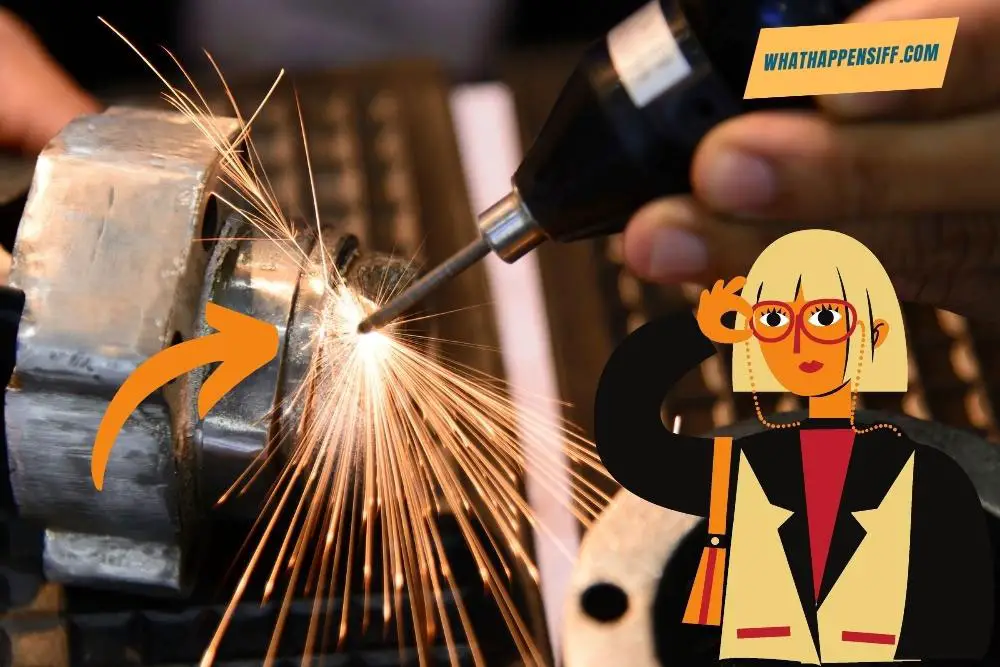
Have you ever glimpsed a welding light? Certainly, yes. The glare of the welding light is so bright that it looks like a firework display. We may get captivated to look at the spark. Regardless, the bright light of a welding arc produces much radiation and heat and thus can be compared to the sun and its radiation.
You may think: Is it okay to look at the bright welding spark? Is welding light dangerous to your eyes and skin just like the sun?
Let’s find out: What happens if you look at welding light?
Never look at welding light without protection because the bright UV and IR rays can damage your eyes. Direct exposure to welding light can burn your retina just like the sunburn and cause photokeratitis, “arc eye” or “welder’s flash”.
The light of a Welding Arc (torch) releases strong radiation over a broad range of wavelengths (from 200 nm to 1400 nm) including UV radiation, Visible light, and IR light. There is no limit of a definite minimum safe distance from the welding light. However, a distance of 50 feet is considered safe for the eyes. So, Welders must use good protection to avoid radiation, hot sparks, and sanding dust.
Read on to know what might happen if you look at the welding light.
What Happens If You Look At Welding Light
Undoubtedly, looking at welding light without proper protection is hazardous to the eyes and skin.
But the effects of welding light greatly depend on three factors; the distance from the source, the intensity of welding light, and the duration of exposure. Be careful, a few seconds of direct exposure to the welding light can cause Arce Eye.
What is Arc Eye?
Arc eye is corneal damage caused by direct exposure to UV light emitted from a welding torch, the sun, or any other source. Arc eye is also called photokeratitis in medical terms. Hence other familiar names are welder’s flash, arc flash, arc eye, and welder’s eye.
In Arc Eye, you can feel pain, irritation, sensitivity to light, and bloodshot in one or both eyes. You must visit your doctor and follow the instructions. In some severe cases, it can lead to blurriness or blindness.
What Happens If You Look into a Welding Light
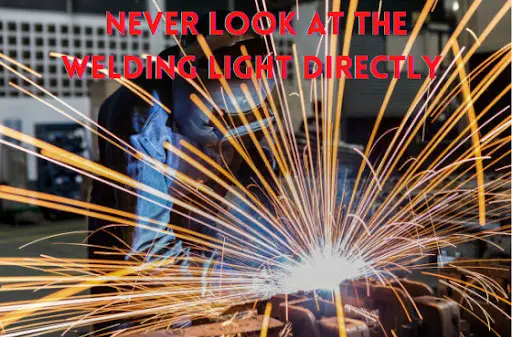
Looking at the welding arc is not as simple as the fireworks because intense radiation emits during the welding process. What happens when you look at a welding spark or flash?
You shouldn’t look into a welding light if you are not using adequate protection to prevent radiation. Because the UV and IR radiation is dangerous for your eyes and can cause flash burns (retinal injury), severe eye inflammation, pain, and redness.
To protect the workers and the public from the radiation of welding light, it is best to cover the specific area in which the welding process is carried out.
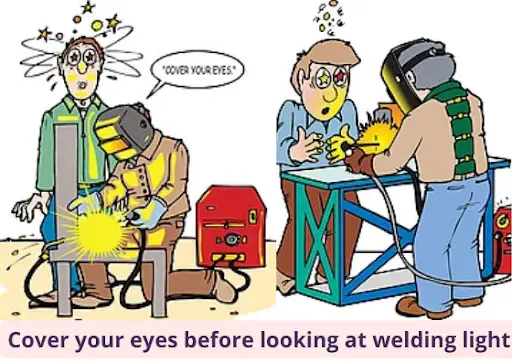
What Happens If You Accidentally Look At Welding Arc
Welding is a curious job and the welders are always at risk of sunburn, heat damage, or eye injury. Hence, the reflection of a welding light is equally harmful to the eyes. What happens if you look at the welding arc accidentally?
You might hurt your eyes if you look at the welding arc or reflected radiation whether accidentally or intentionally. While welding, you must be equipped with a mask and full protection. Because a little glimpse of UV radiation can damage your eyes, face, and skin.
Welding masks or helmets,protective gloves, and clothes are a must for the welders. It is essential to protect yourself from the potential damages of radiation, high heat, hot pieces of slag, and hot sparks.
What Happens When Looking at a Welding Light From a Distance
Definitely, the heat and radiation of a welding arc are very similar to that on the surface of the sun. During a welding process, the temperature may exceed from 3,000°F to 6,000°F. But the sun is far away and its radiation comes to us after filtering through the atmosphere.
It is pretty safe to look at the welding light from a long distance of 30-50 feet. Because the radiation and the heat of the welding arc are no more harmful from such a long distance. But we suggest never looking at the bright welding light even from a long distance.
However, it is recommended to screen off the working areas to protect the others from glare and radiation during welding projects.
How Long Do You Have to Look at Welding to Get Arc Eye
The intensity of an arc eye depends on many factors such as the distance from the source of light, the nature of radiation, and the time of exposure.
Unprotected exposure even for a few seconds can lead to an arched eye and may result in temporary or permanent blindness and skin cancer. The more you are exposed to radiation closely, the more eye damage you may have.
Hence the symptoms of arc eye will appear after 3 to 12 hours of exposure to ultraviolet rays. Be careful, never leave your eyes untreated as it may lead to cataracts and permanent blindness.
Arc Eye Symptoms and Causes
Of course, the UV radiation of a welding torch is strong enough to cause retinal injury, also known as arc eye, welder’s flash, or arc flash. It is an inflammation and swelling of the mucous membrane of the eye. Some common symptoms are:
- Often it starts from mild pain in the eyes and then shifts to severe pain.
- Redness, irritation, and tearing of the eye and on the surrounding skin.
- Unable to look in the light and at the sources of light.
- Feel like “sand in the eyes” or “sharp glass pieces in the eyes”.
Usually, the impacts of welding light don’t appear soon after exposure. It takes some time depending on the intensity of light and distance from the source. But be wary, a few seconds of direct exposure to intense UV light can lead to an Arc eye.
Welders Flash or Arc Eye Treatment
Some possible treatments for arc eye and corneal burns may include:

Similar Posts