
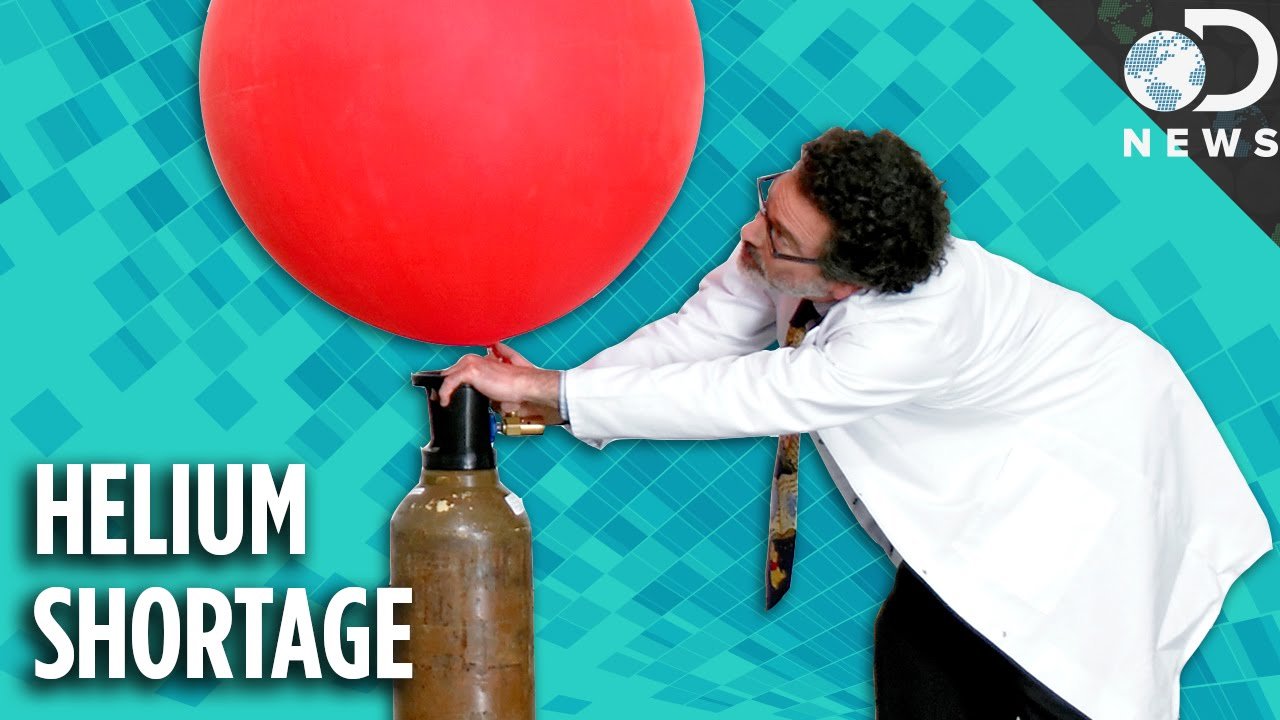
If we run out of helium, many medical procedures, science experiments, and manufacturing processes would become impossible as helium is essential for these activities. Additionally, the most crucial use of helium is as a coolant for superconducting magnets in MRI machines.
Without helium, the development of a breakthrough in materials science regarding “high-temperature” superconductors would be necessary to create an MRI machine that works without helium. The supply of helium would gradually become expensive and restricted to medical and industrial purposes.
Hydrogen could potentially substitute helium in some cases, although it is more challenging to store and use. Eventually, helium balloons would become a thing of the past like horse-drawn carriages and wall-attached phones.
The Importance Of Helium In Various Industries
The depletion of helium will have significant implications for various industries. Medical procedures, scientific experiments, and manufacturing processes that rely on helium will no longer be feasible. Alternatives like hydrogen may be considered, but the scarcity of helium will lead to restricted usage and increased costs.
The absence of helium would also impact the functioning of superconducting magnets in MRI machines, requiring breakthroughs in materials science to develop alternatives. Ultimately, the loss of helium would change the landscape of many industries and everyday activities.
Medical procedures and the role of helium in MRI machines:
- Helium is crucial for cooling the superconducting magnets in MRI machines, allowing them to function effectively.
- MRI machines are used in various medical procedures, such as diagnosing and monitoring diseases and injuries.
- Currently, there is no alternative coolant that can replace helium in MRI machines.
- The development of magnets that work at higher temperatures could potentially eliminate the need for helium in MRI machines, but this would require significant advancements in materials science.
Science experiments and the impact of helium shortage:
- Helium is widely used in scientific research and experiments, particularly in cryogenics.
- Cryogenics involves studying the behavior of materials under extremely low temperatures, which is made possible by the cooling properties of helium.
- A shortage of helium would limit the availability of this essential element for scientific research and hinder the progress of many experiments.
- Helium is also needed for cooling particle accelerators, which are crucial for fundamental research and discoveries in physics.
Manufacturing processes and the reliance on helium:
- Helium plays a vital role in various manufacturing processes, mainly as a protective gas.
- In industries such as electronics, semiconductors, and fiber optics, helium is used to prevent oxidation and contamination during manufacturing.
- The absence of helium would lead to challenges in maintaining the quality and reliability of these products.
- Helium is also used in welding and heat treatment processes to ensure proper temperature control and prevent defects.
The scarcity of helium would have significant implications in several industries and scientific fields. MRI machines may require alternative cooling methods, advancements in materials science, or the development of high-temperature superconductors. Scientific experiments and manufacturing processes would face obstacles without a sufficient supply of helium.
It is essential to explore alternatives and develop sustainable practices to ensure the availability of helium for these critical applications.
Consequences Of Running Out Of Helium
Helium is essential for various medical procedures, science experiments, and manufacturing processes. If we were to run out of helium, these activities would become impossible. It is also used as a coolant in MRI machines, and finding an alternative would require a major breakthrough in materials science.
The scarcity of helium would lead to increased costs and restrictions on its use, making it a precious resource in the future.
:
Restrictions On Helium Usage Due To Scarcity And High Cost:
- Helium is used in various industries and applications, including medical procedures, science experiments, manufacturing processes, and more. Without helium, these activities would not be possible.
- As the supply of helium runs out, its scarcity will drive up the cost, making it unaffordable for many users.
- The limited availability and high cost would lead to strict restrictions on helium usage, primarily limiting it to essential medical and industrial purposes.
Substitution Of Helium With Alternative Gases Like Hydrogen:
- With the depletion of helium, the industry would explore alternative gases to replace its usage.
- Hydrogen, despite being more challenging to store and handle, has the potential to be substituted for helium in certain applications.
- However, the substitution process would require significant advancements in technology and safety measures to ensure efficient and safe use of hydrogen as an alternative.
Remember, the possibility of running out of helium raises concerns about the limitations it would impose on various industries and the need to find viable alternatives like hydrogen. The scarcity and high cost of helium would result in strict restrictions on its usage, impacting critical sectors that heavily rely on this gas.
The Future Of Helium And Possible Solutions
The future of helium is uncertain as its limited supply raises concerns. Without helium, essential medical procedures, scientific experiments, and manufacturing processes would be impossible. While alternative solutions such as higher temperature magnets or hydrogen substitution may be explored, the scarcity of helium could lead to restricted usage, making floating balloons a relic of the past.
Possibility Of Inventing Magnets That Do Not Require Helium Coolant:
- Magnets used in MRI machines currently rely on helium coolant for superconductivity.
- Scientists are exploring the development of magnets that can function at higher temperatures, eliminating the need for helium.
- These breakthrough magnets could potentially use more readily available coolants like liquid nitrogen.
The Need For Breakthroughs In Materials Science:
- Creating an MRI machine that operates without helium would require significant advancements in materials science.
- Current high-temperature superconductors are not suitable for normal pressures and would need to be developed to enable the use of alternative coolants.
- The realization of such breakthroughs would have far-reaching implications beyond just MRI machines, impacting various industries and sectors.
Helium Floating Off Into Space And The Consequences Of Helium Leaving The Earth:
- Helium is a finite resource that is gradually escaping Earth’s atmosphere and dissipating into space.
- As the supply diminishes, the cost of helium will increase, potentially limiting its use to critical medical and industrial applications.
- The loss of helium can disrupt valuable scientific research, hinder advanced manufacturing processes, and impact technological advancements.
- Helium is irreplaceable and plays an essential role in various fields, making it crucial to find sustainable solutions and alternative sources.
The future of helium revolves around the possibility of inventing magnets that do not rely on helium coolant and the need for breakthroughs in materials science. The consequences of helium leaving the Earth are significant, stressing the importance of finding sustainable solutions to preserve this invaluable resource.

Credit: www.npr.org
Frequently Asked Questions On What Happens If We Run Out Of Helium
How Long Until Earth Runs Out Of Helium?
Earth will run out of helium, making medical procedures, science experiments, and manufacturing processes impossible without it.
Could We Live Without Helium?
Without helium, many medical procedures, science experiments, manufacturing processes, and other activities would be impossible. Helium is crucial for cooling superconducting magnets in MRI machines. If a breakthrough is made in high-temperature superconductors, helium may no longer be needed. However, currently, there is no material that works as a substitute for helium in this context.
The supply of helium may become expensive, leading to restrictions on its use. Hydrogen might be used as a substitute where possible. Helium can escape from the Earth’s atmosphere over time, but reclaiming it is not technologically feasible. In short, the lack of helium would greatly impact various fields and industries.
Can We Make More Helium?
No, we cannot make more helium. Helium is necessary for many medical procedures, science experiments, and manufacturing processes.
Do We Need Helium For Anything?
Helium is essential for medical procedures, science experiments, manufacturing processes, and more. If we run out of helium, these activities will not be possible. Helium is particularly important as a coolant for MRI machines. Finding an alternative would require a major breakthrough in materials science.
As helium becomes scarce, its use will be limited to medical and industrial purposes, and hydrogen may be substituted where possible. Balloons filled with helium will become a thing of the past.
Faq 1: What Are The Consequences Of Running Out Of Helium?
The lack of helium would prevent various medical procedures, science experiments, manufacturing processes, and other activities that rely on helium.
Conclusion
If we were to run out of helium completely, it would have significant implications in various fields. Medical procedures, science experiments, manufacturing processes, and other important activities that rely on helium would simply not be possible. One of the most critical uses of helium is as a coolant for superconducting magnets in MRI machines.
However, there could be potential advancements in materials science that may lead to the invention of magnets working at higher temperatures, which could eliminate the need for helium and allow for alternative coolants like liquid nitrogen. Nonetheless, such breakthroughs are currently nonexistent.
Additionally, the supply of helium would become so expensive that its use would be restricted to medical and industrial purposes only, rendering floating birthday balloons a thing of the past. While helium can technically be reclaimed from the atmosphere, the minuscule amount present makes it technologically unfeasible.
Ultimately, it is crucial to consider alternatives and work towards sustainability in helium usage to prevent the depletion of this essential resource.